
Stinging nettles are among some of the first greens to pop up in the Spring. And you’ll probably have a irritant brush or two with them throughout the Summer. But could there be a lot more purpose and potential to this “weed” other than to nettle you?
That’s right. That was a pun right there and I’m not sorry about it…
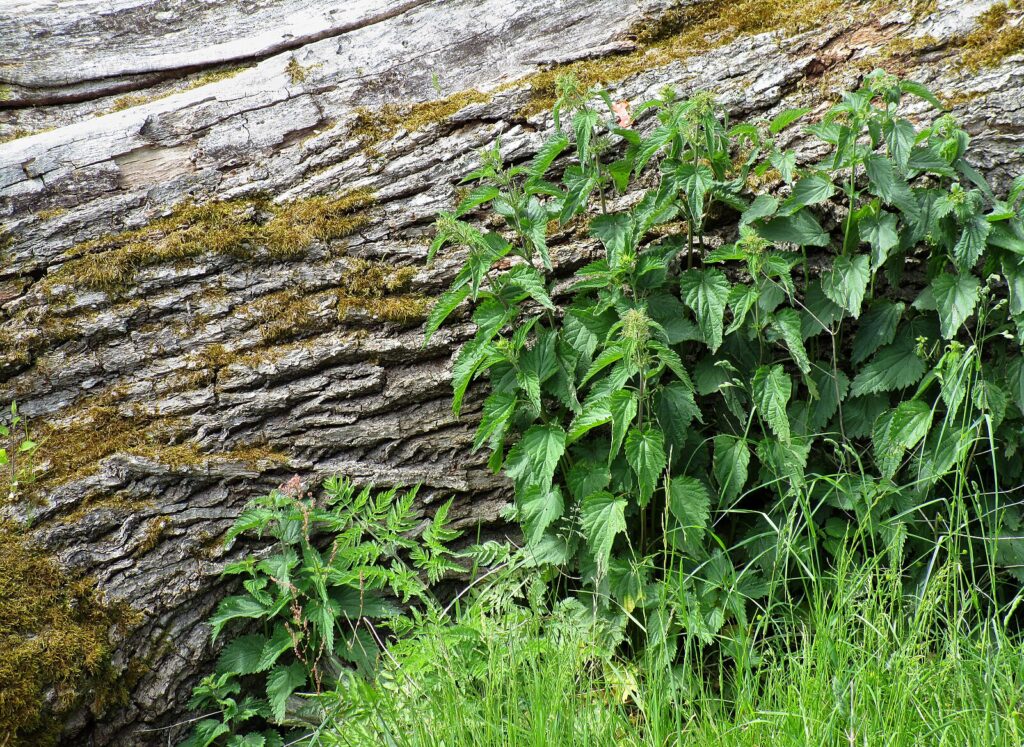
The Stinging Nettle (Urtica dioica) a herbaceous perennial plant. It is most well known by its tiny stingers that act like tiny hypodermic needles that inject irritant chemicals upon contact with the skin. It usually grows in large clumps, causing one look out and avoid them. Children and city folk looking for a nature experience discover them real quick.
But after you hear what I have to tell you more about them, you just might think of them a bit differently. At least, I hope so. Here are some surprisingly great things about stinging nettles…once you get past the stingers.
Great for the Compost Heap!
Nettles are rich in nitrogen, magnesium, sulphur and iron. They are an absolute fantastic addition to your compost heap. Especially if you need some bulk “green” material to balance out the “brown” material. Chop them up fine to hasten the decomposition process.
Be sure not to add any roots or mature stems that have seeds to your compost heap…for obvious reasons.
Animal Feed
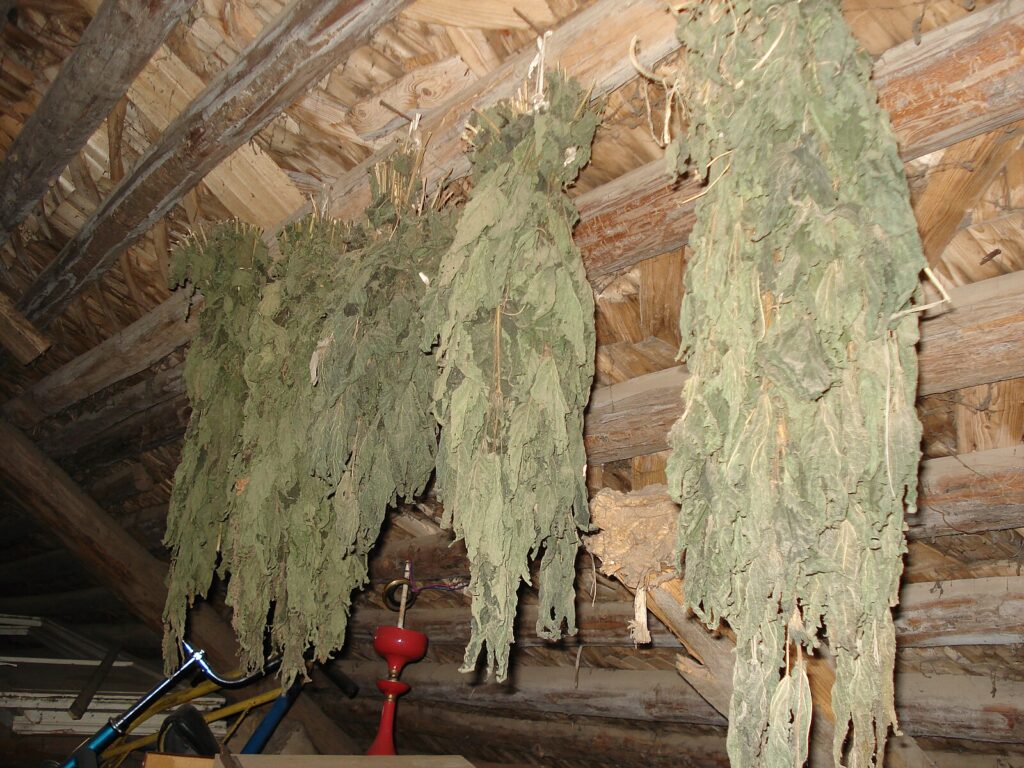
Ruminant livestock such as cows and sheep will avoid fresh nettles. That is why you always see proud stands of them in almost any pasture. However, if nettles are harvested and hung to dry, then it’s a different matter. They will then happily munch on them, being a great source of protein. It’s yet another free source of supplemental feed if you are a homesteader who is lucky enough to own a milk cow or goat or sheep. I also read that chickens, which need a protein-rich diet, also like dry nettles. I have not tried this personally on my chickens yet; but I will definitely let you know!
You can eat Nettles Too!
There are several ways to eat stinging nettles and the taste and nutrition are well worth the effort in my opinion. Cooked, they have a flavor similar to spinach. They can make a great side dish, an addition to your stew, or as a garnish for whatever meat you are grilling.
But how do you get rid of the stingers??
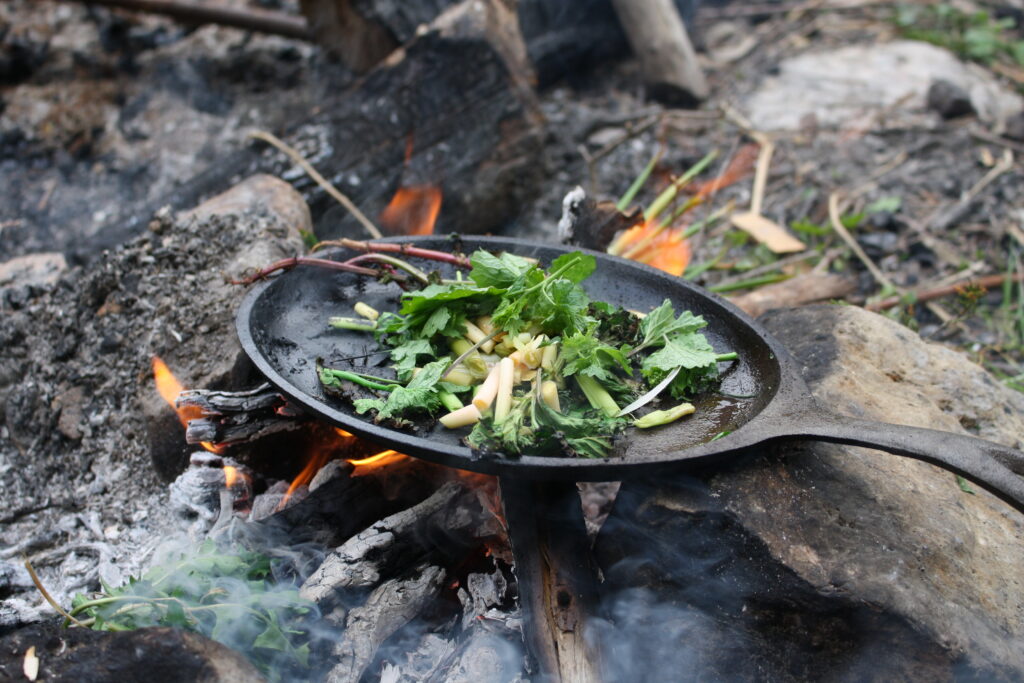
Simple! Heat neutralizes the stinging chemicals in nettles. The simplest way to render a nettle stingless is to wilt it over a campfire. Be sure not to miss any tiny leaves! The children love this simple method. I think they are fascinated by the fact that they can render harmless this scary-looking, most irritating plant and turn it into food.
Another way is by cooking the leaves in boiling water. they can then be added to your stew or made into pesto.
One of my preferred ways of consuming nettles is to fry them on a skillet in lard, butter, or duck fat with a dash of salt. You can read more about cooking nettles in my article: Easy Spring Foraging Ideas for the Family.
How to Harvest Nettles
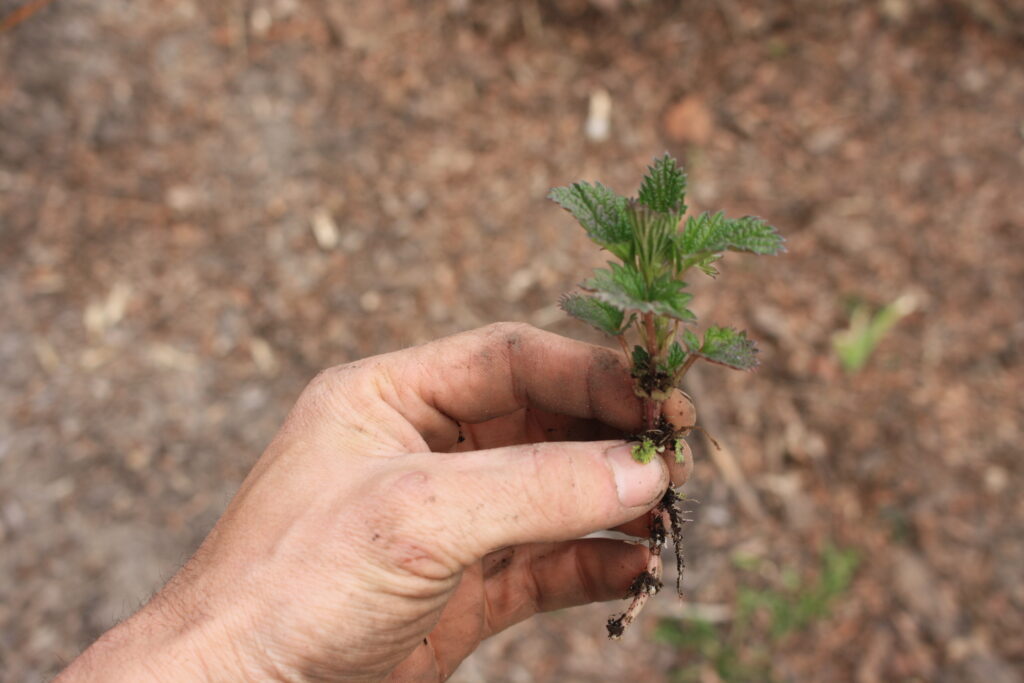
First you should know that the stingers are in the leaves. The stalks, though hairy, do not have stingers.
Of course, a pair of leather gloves makes the job quick and easy enough–especially if you plan on harvesting a lot. But, with a little practice and confidence, you can actually pluck them with your bare hands by grasping the stalk and pinching off the leaves at their base where they meet the stem.
Ancestral Uses of the Nettle
Of course, discovering a forgotten cultural context of a seemingly mundane plant, such as stinging nettle, really fires me up.
Nettles as Bast Fibre
“Bast” is the term that usually refers to the use of plant fibers to make string, rope or fabric. It’s a good word to add to your repertoire. This, obviously, was an essential skill and industry in the pre-plastic era that we have virtually forgotten about nowadays.
In fact, nettles were an important source of bast for our ancestors, probably as far back as the pre-agricultural Stone Age. As the nettle stalks mature, they become more tough with a woody pith. the stalks can then be stripped of the pith the long tough fibers would be dried. Then they can be twisted into a simple two-ply cordage. This was most effective in making nets, string, rope, baskets, etc.–all very important and basic items of everyday life, but rarely survive in the archaeological record.
However, the most astounding use of nettles dating back to the Nordic Bronze Age (2800 years ago) has been found in Lusehøj, Denmark, where nettle fibers had been processed to make textile–much like how linen is made from flax! Should you be interested in the scientific article you can read it here.
Now believe me–spinning and textile making is a whole other world in which I personally have very little experience. But in an age of petroleum-based fabric and unethical fast-fashion trends, I am increasingly fascinated locally-produced natural fibers.

Is there a Future to the Stinging Nettle?
So, knowing all the potential uses of the common stinging nettle, the question remains: are they worth harnessing to your purposes?
For one thing, it grows wild and in abundance–no need to sow or carefully cultivate! It will most likely keep growing along side of us all the way to Judgement Day. Now, that is an annoyance to those who consider it a weed of no human use or purpose. However, this fact could be a great benefit for someone who perhaps has found a way to integrate it into their list of staple resources. If you are one of those innovative folk, I sure would love to hear about your experiences!
~ Nathanael

Leave a Reply