
With the coming of Spring, a great project to get into is a living fence. Get ready for yet another willow project!
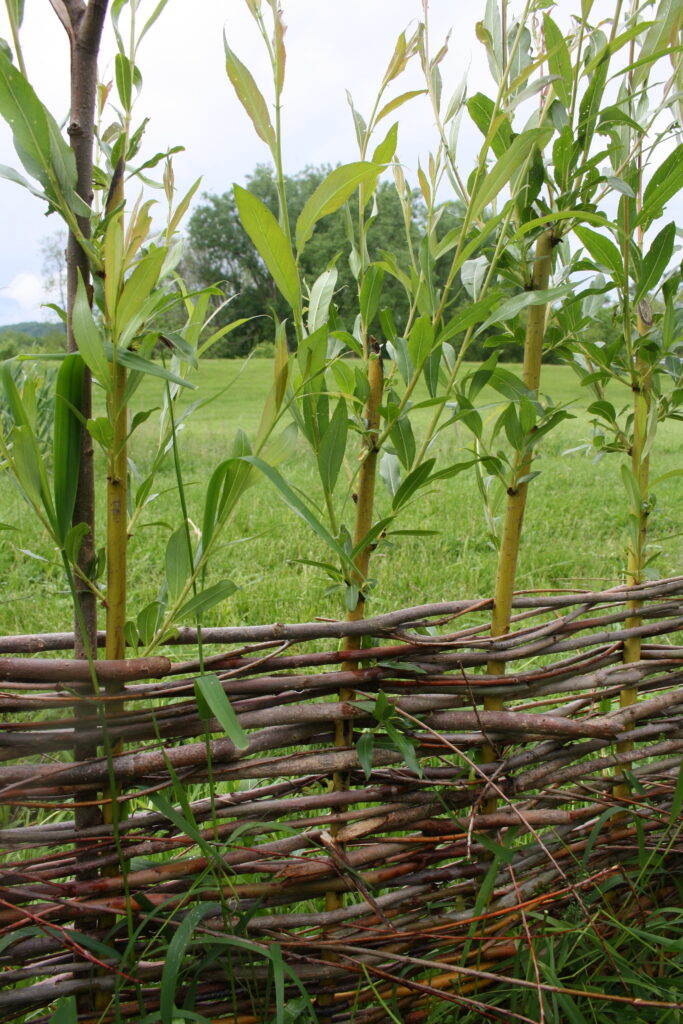
I’m telling you: the willow gives innumerable possibilities. I just keep thinking of new ways to utilize this amazing type of wood. Thus I thought it good idea to build a living structure that grows a harvestable amount of raw material.
Why build a living fence?
There is considerable labor involved in making a living fence. Here are some factors to consider:
You need alot of material: to start with: expect to gather lots of withes in order to make a fence.
Working with Nature: working with natural materials, such as green, springy willows, requires patience. Give yourself time to become accustomed to the feel of the material and how it works.
Aesthetically pleasing: In this industrial world, our daily lives are dominated by goods manufactured in a pre-fabricated setting. We also tend to obsess over utilitarian value to a point that we sacrifice beauty Sometimes we don’t even realise how much we yearn for simple aesthetic beauty as a wattle fence.
Annual maintenance: a living fence is a dynamic, growing thing. Expect to regularly prune and shape it so that does what you want it to do.
Privacy screen: Something to consider if you want to block the view of an ugly highway or building!
Grow your own animal fodder: Livestock like cattle, sheep and goats originally was never meant for eating exclusively grass. Green leaves and shoots are also a good source of nutrients. It apparently also is a good way of ridding the gut of parasites. On top of this, it is a perennial crop–that means: it doesn’t need to be sowed and fertilized every year.
The Properties unique to willow–and how it shaped our history
Willow is a soft, lighter wood. In a watery environment, it grows insanely-quick: some of my saplings grow up to 10 feet high in one season. It is not tough like ash or oak. However, the ancestors long ago discovered that its strength lie in its flexibility. Though one sapling may be weak on its own, hundreds of saplings can be twisted and woven together to make anything from baskets to houses!
The craft of wickerwork or wattle is one of the most basic building blocks of our cultural past–literally. Because it rejuvenates and grows so quickly, it provides a ready supply of cheap, renewable resources.
Think about how plywood and OSB board is so vital to modern construction. The concept is the same with using wattle: combining several thin pieces of lower quality wood to make a strong and durable panel.
Lastly, a tree can be virtually grown out of a willow twig that is freshly-cut and stuck in the mud. Essentially, you can grow your raw material for free! You can read more about that in more depth here.
Gathering materials
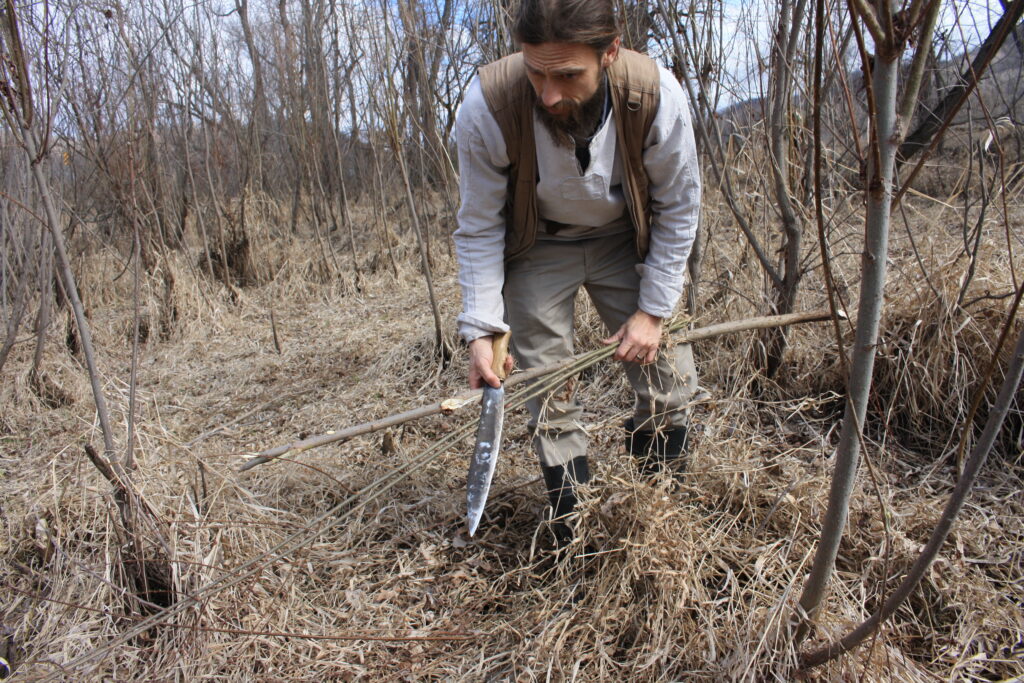
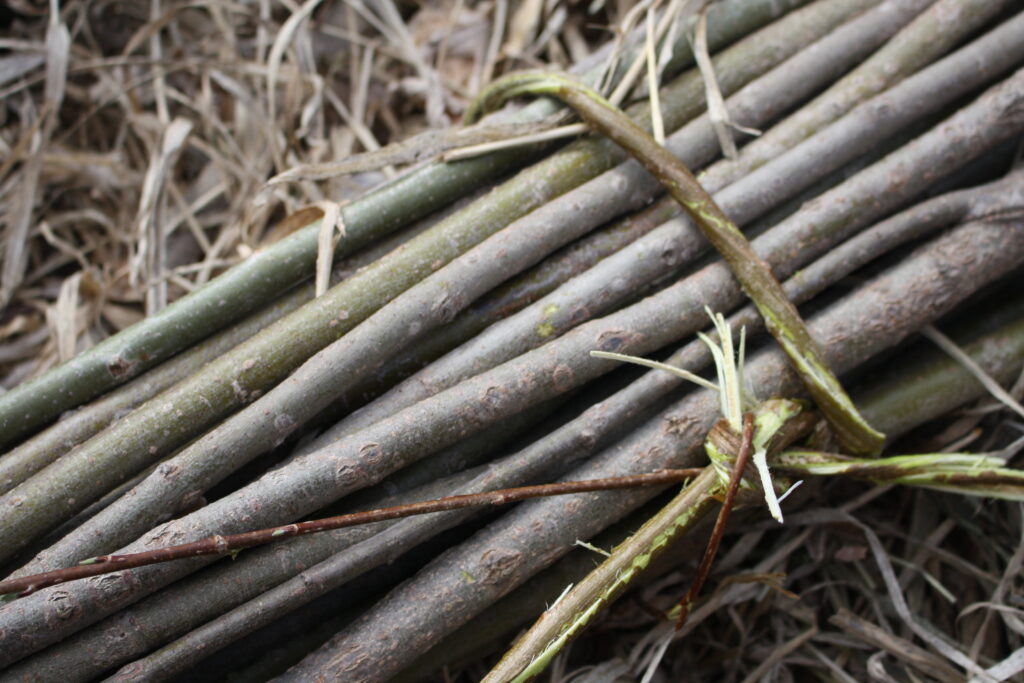
I gathered my willow from both my little coppice and from the wild.
When and where to start your living fence project
Late Winter-early Spring is the right time to cut your willows. The dormant sticks that will become the vertical uprights will then leaf out once the weather warms up.
If you are building/planting your living fence in a low, soggy area, you should have no problems in keeping it alive. However, if your location is in a higher, more well-drained area, you may have “water” your fence in order to get it established. Remember, willows like it wet.
I planted mine on the edge of my willow coppice marsh. The posts will multiply the production of withes to meet my increasing needs for willow.
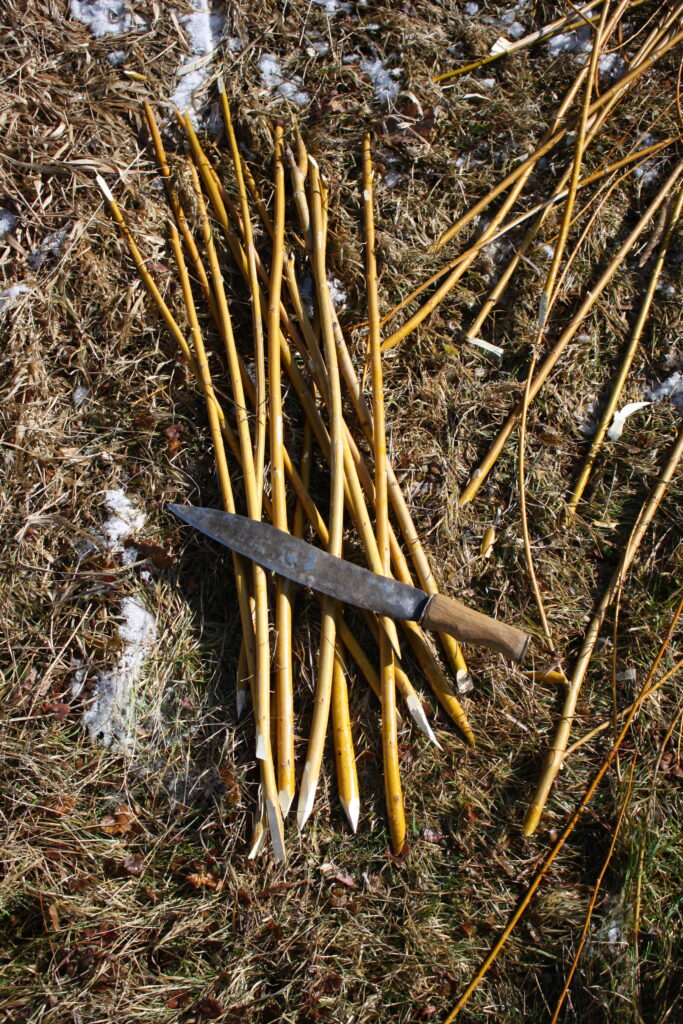
First, cut your vertical posts and stick them evenly spaced in the ground. IMPORTANT: if you want the posts to rejuvenate, you must stick the the stump side of the stick DOWN.
Begin by placing the posts evenly spaced in the ground.
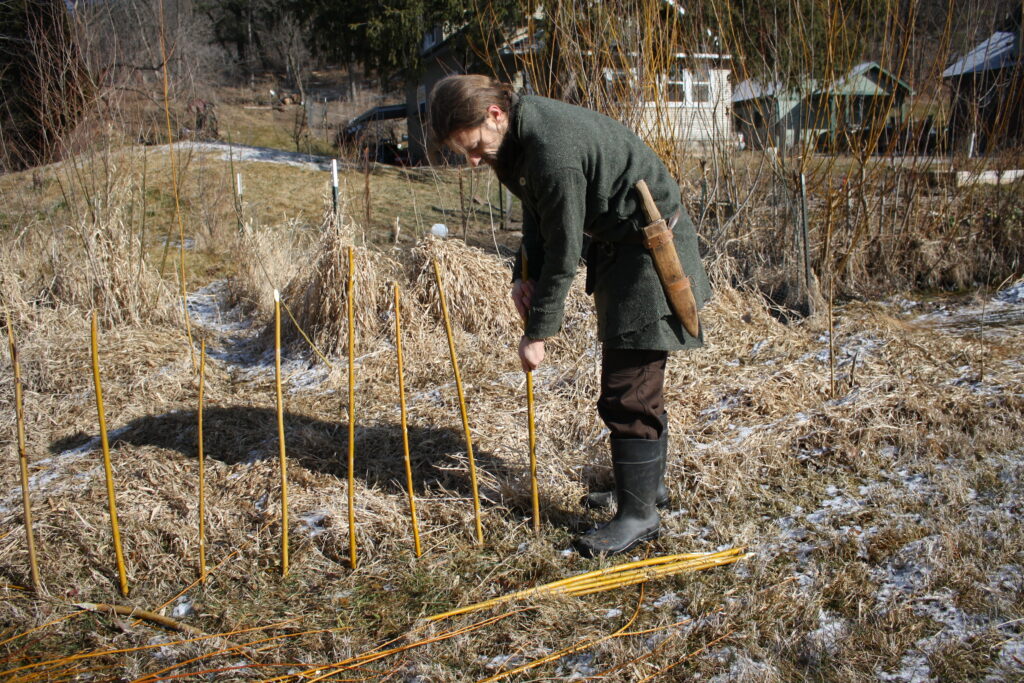
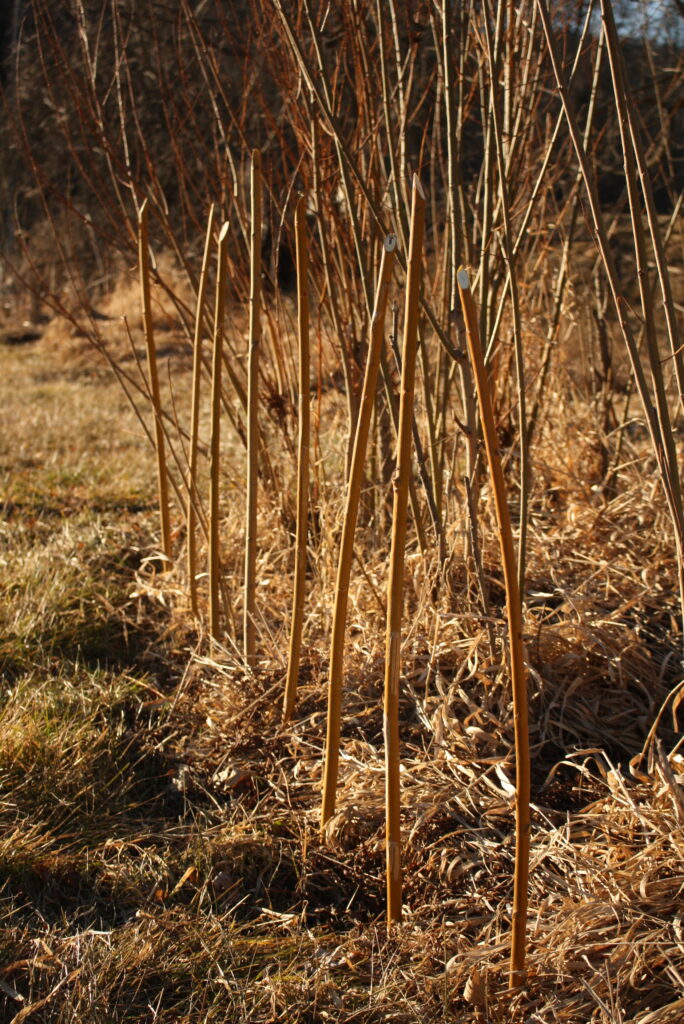
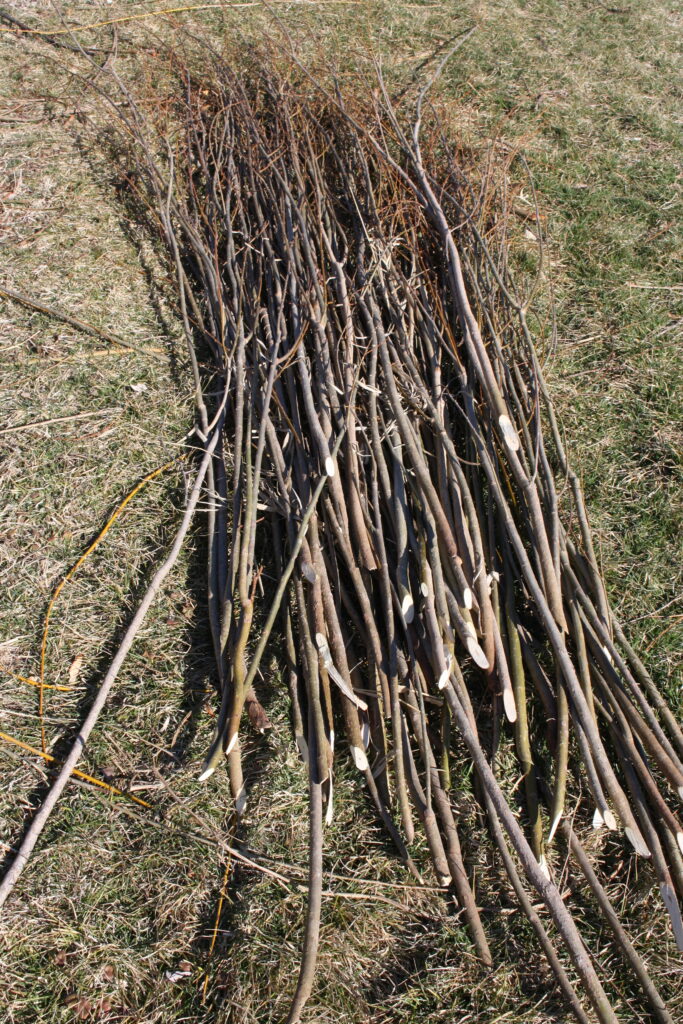
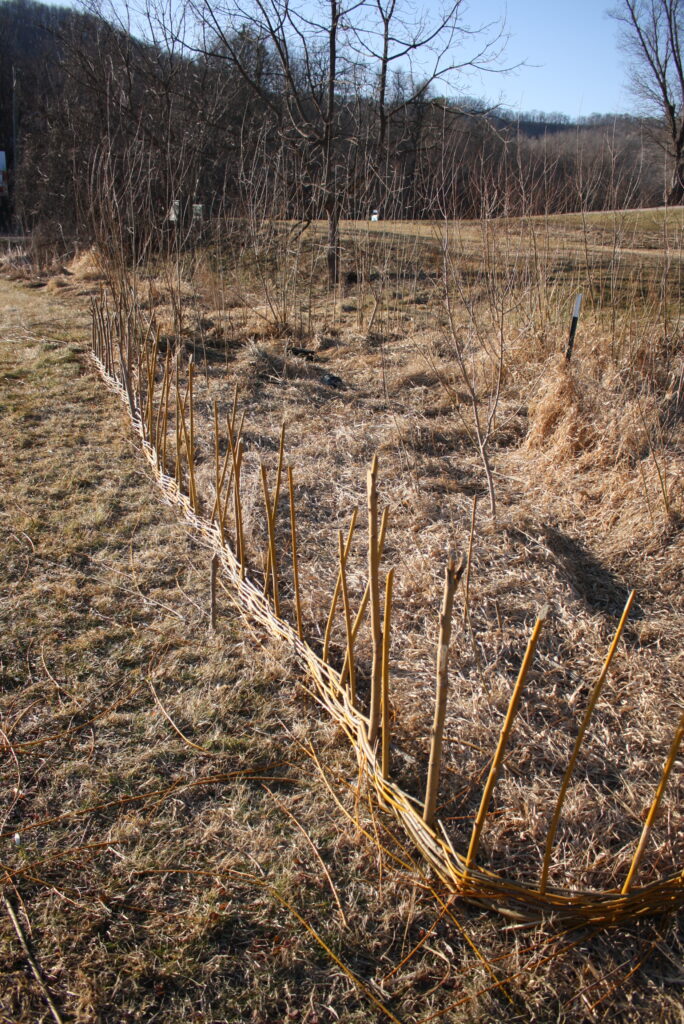
As shown above, the easiest way to do a corner in a wattle fence is at a gentle curve rather than a square 90 degrees.
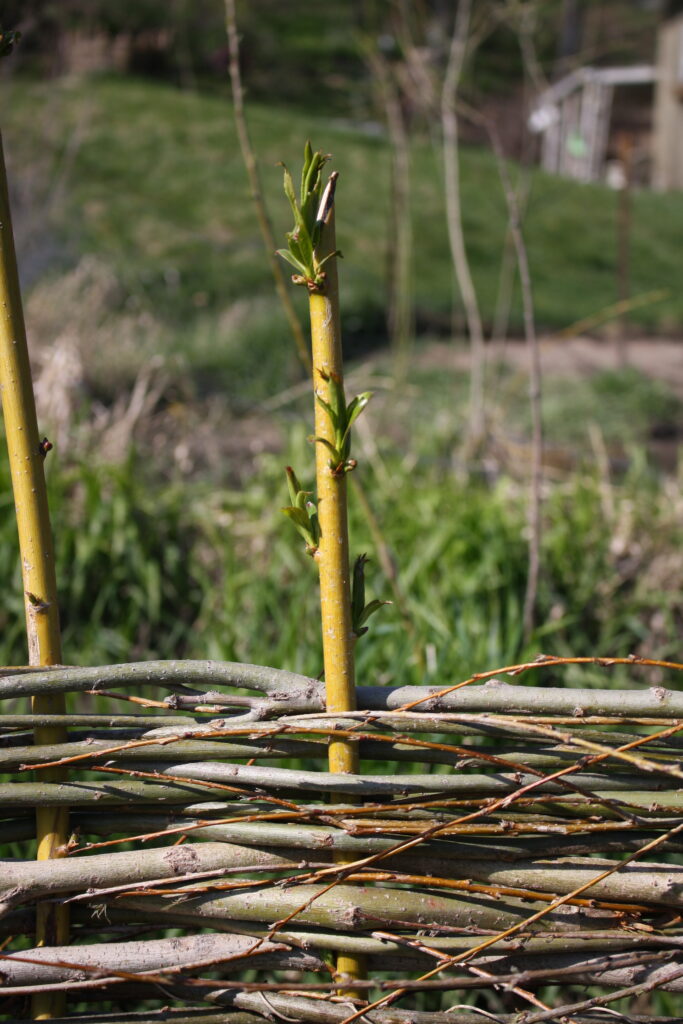
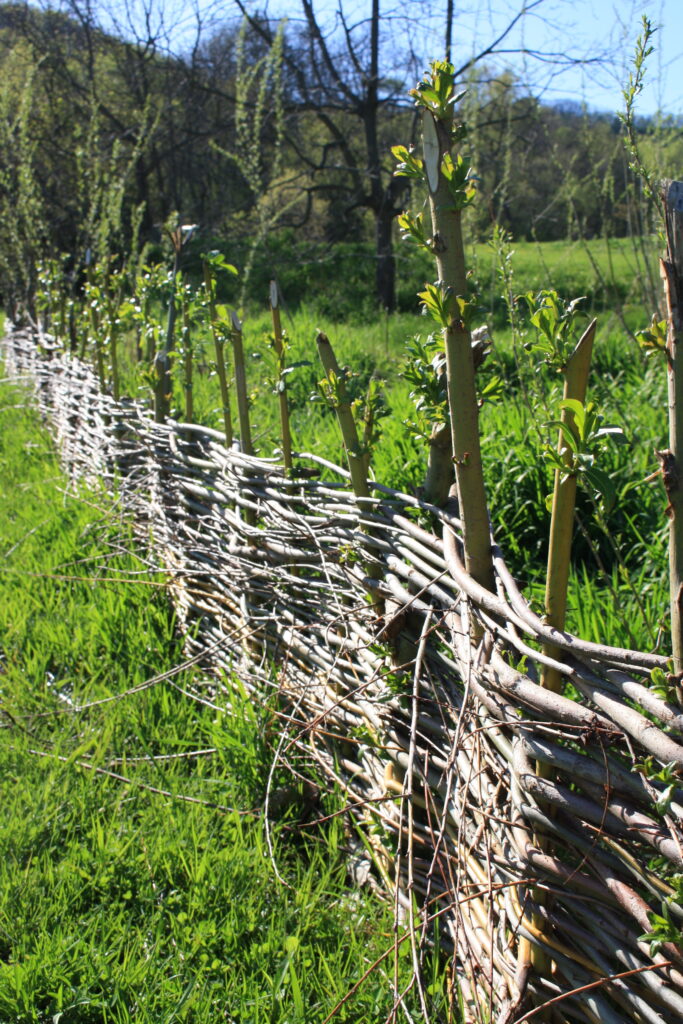
Weave the fence to the desired height. After that, it is just a matter of waiting for the Spring sun to gather in strength and for the posts to shoot forth their leaves!
What I expect from this living fence
As time goes on, I expect the posts will continue to grow to make more of a living hedge. The horizontal wattles will eventually rot, in which case, I’ll have to cut new withes to replace them. In that case, the withes produced by the tops of the posts will provide a ready source of new material. That’s the theory anyways. We’ll just have to see! In the mean time, the wattle fence contains our Rouen ducks who live in my willow coppice. ~Nathanael

Leave a Reply